
About the PDAB
The Maryland General Assembly created the PDAB in 2020 with a lofty goal: make prescription medications more affordable for Marylanders.
Six years later, the PDAB has failed to save patients a single cent on their prescription medications, and has put Maryland’s life sciences economy at severe risk.
Patient access to prescription medications is a vital public priority. It should be pursued with thoughtful policies and transparent dialogue between policymakers, patients, the life sciences ecosystem, and the public.
How the PDAB Affects You
The PDAB, which is an unelected board, seeks to impose government price controls on a set of prescription medications that Maryland patients depend on.
Price caps imposed by the PDAB are known as Upper Payment Limits (UPL), and they do not help all Maryland residents with their prescription costs. They only apply to state employee health insurance plans.
After years of work, the PDAB has not delivered meaningful savings for Maryland patients—and its current direction ignores real drivers of prescription drug costs, such as the role Pharmacy Benefit Managers (PBMs) and insurance carriers play in inflating costs patients pay at the pharmacy counter.
Patients deserve better. They deserve policies that actually lower the costs they pay at the pharmacy counter while protecting access to the treatments their doctors believe are best for them. The PDAB has failed to accomplish either objective.
How the PDAB Risks Maryland’s Life Sciences Economy
Maryland has historically been a national leader in the life sciences economy, hosting more than 1,000 firms, and more than 50,000 life science workers. Our ecosystem is globally renowned for discovering and developing medications, treatments and therapies for a range of conditions, including cancer, Muscular Dystrophy, Epilepsy, and rare diseases.
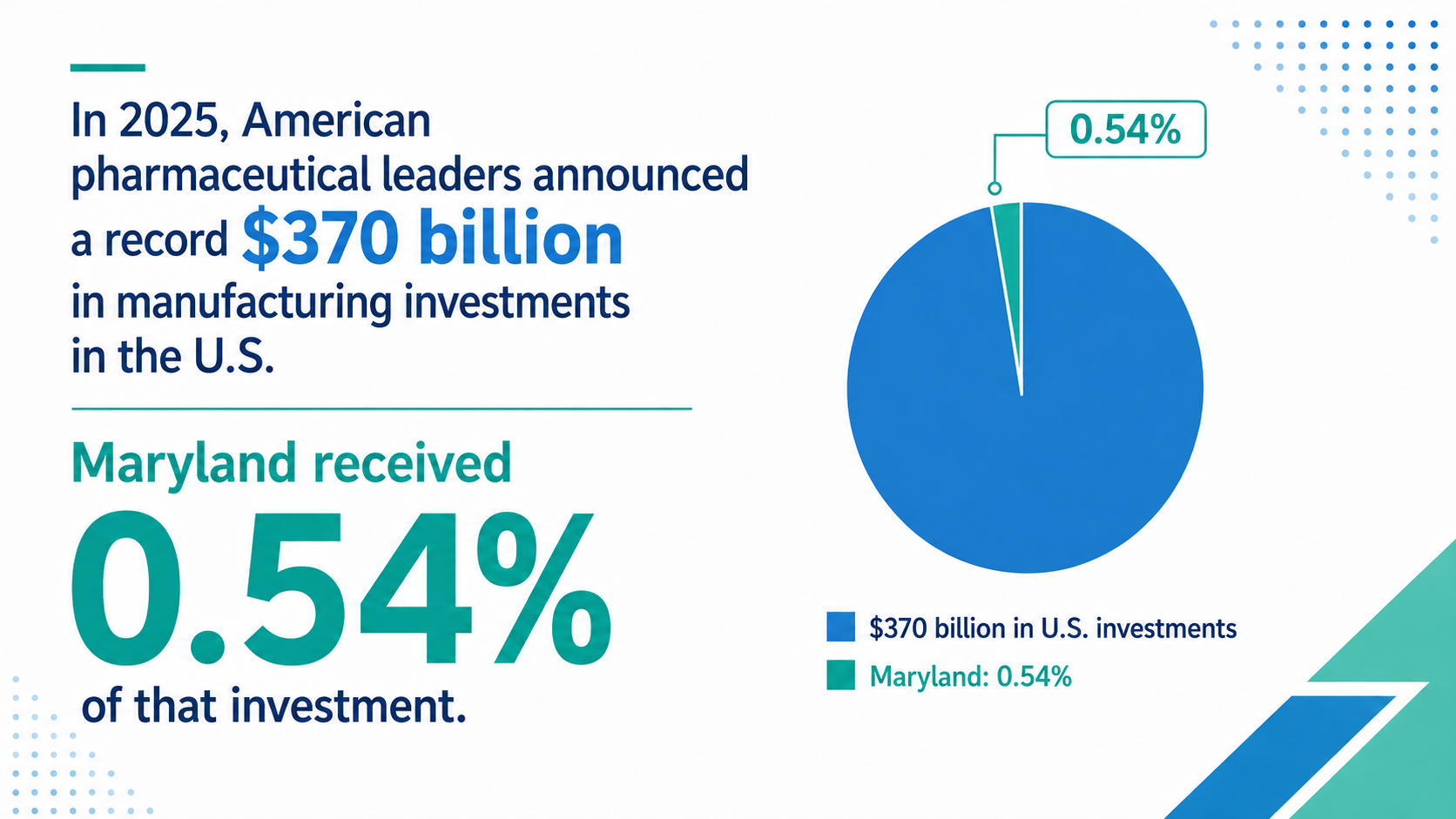
But the PDAB has put this ecosystem at risk. In 2025, American pharmaceutical leaders announced a record $370 billion in manufacturing investments across the U.S. Maryland received 0.54% of that investment.
The reason is simple: companies considering where to locate research, manufacturing, and commercialization operations evaluate not just local workforce and infrastructure, but also regulatory risk.
State policies like the PDAB that may alter their reimbursement structures or limit market viability for their medicines have a chilling effect on our ecosystem. Investment particularly for early-stage and mid-sized firms that drive much of Maryland’s innovation economy are at risk.