

Data Centers in Maryland: A Generational Opportunity
Behind today’s scientific breakthroughs, credit card transactions, and modern patient care sits a data center—and Maryland is uniquely positioned to become the engine powering it all.
Hundreds of Marylanders gathered August 20 for a day-long exploration of the digital infrastructure economy and how it creates high-paying middle-class careers and robust tax revenues while honoring the communities in which it operates.
Hosted by the Maryland Tech Council, the Maryland Data Center Summit featured speakers from a diverse range of fields, from technology and organized labor to medicine, construction, policymaking, and clean energy.
The Summit took place as local governments in Maryland pause data center permitting in order to gather insights and begin drafting rules that govern data center siting, construction, and operation.
Guardrails and Growth are Not Opposites
Kelly Schulz, CEO of the Maryland Tech Council, framed the digital infrastructure industry as “a generational opportunity,” saying, “Maryland has all the assets needed to be a major player in the digital infrastructure industry. We have three key ingredients: talent, land, and infrastructure. Now, we just have to seize the generational opportunity in front of us.”
Schulz also pledged to make MTC a nonpartisan, fact-based resource for local governments and residents who have questions about data centers and their perceived impacts.
“Our goal is simple: no county should have to start from a blank page, and no county should be left choosing between no rules and no data centers. Guardrails and growth are not opposites. The counties that use this pause to adopt clear predictable standards will be positioned to capture investment when the pause ends,” Schulz said.
Rowan Digital Infrastructure: A Good Neighbor in Frederick
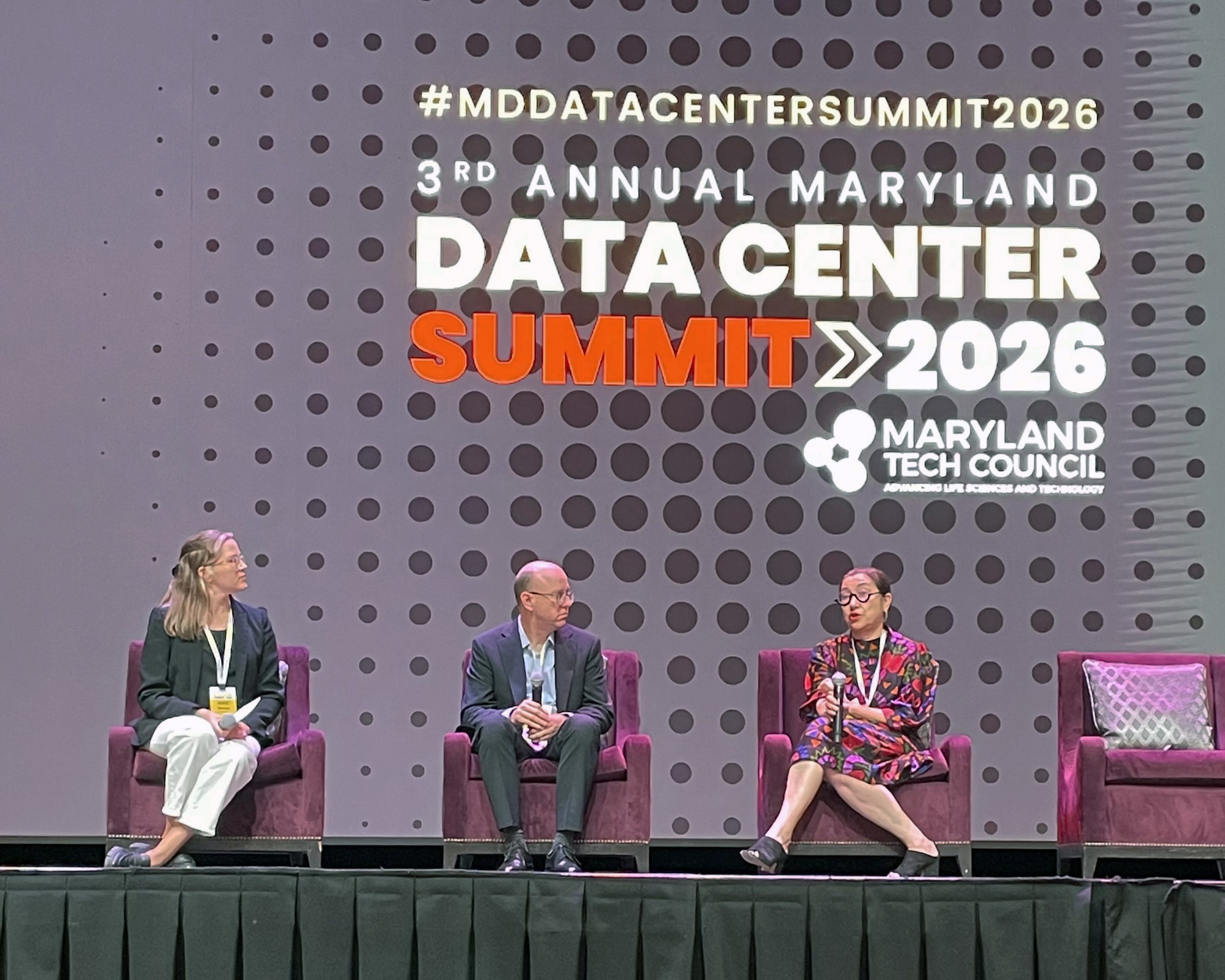 As the owner of three data centers in Frederick County, Rowan Digital Infrastructure is one of the largest employers in the county, and has invested over $3 billion in Maryland. Rowan recently announced $250,000 in local community grants to support civic organizations across Frederick County.
Stephen Jenkins, Rowan’s Chief Development Officer, praised Frederick County and Maryland for its unique assets: strong local partners, robust workforce, and geographic location.
“Maryland should continue to compete on value and not on volume. Maryland should not worry about being Virginia 2.0. That’s not how we see Maryland,” Jenkins said.
Jenkins also highlighted the broader societal benefits made possible by data centers.
“The real economic prize is not just the data center – it’s what it supports in Maryland: cyber security applications, quantum computing applications, AI applications. What we should be looking at is building the infrastructure to create that ecosystem, which improves society for us all.”
Rowan also recently announced it had signed the national Ratepayer Protection Pledge and supported Maryland’s Utility Relief Act, both of which are designed to protect electricity ratepayers by ensuring new large-load customers pay for all new power delivery infrastructure upgrades required to service a data center.
“Developers like Rowan will always be paying our way and ultimately protecting citizens from the costs of transmission upgrades,” Jenkins said.
Improving Patient Access to Care Requires Digital Infrastructure
Caroline Popper, M.D., Co-Founder and President of Popper & Company, said data centers are enabling a new industrial revolution that Maryland should lead, and that it will have benefits for health care in the state.
“I can tell you that AI, in many applications in which it’s used, provides superior care…The purpose is not data centers in and of themselves. The reason they exist is to ultimately improve, in the case of health care, quality and access…There is absolute peer-reviewed evidence that AI can review images – pathology, radiology, dermatology – better than humans alone,” Popper said.
Launching Marylanders into the Middle Class
default
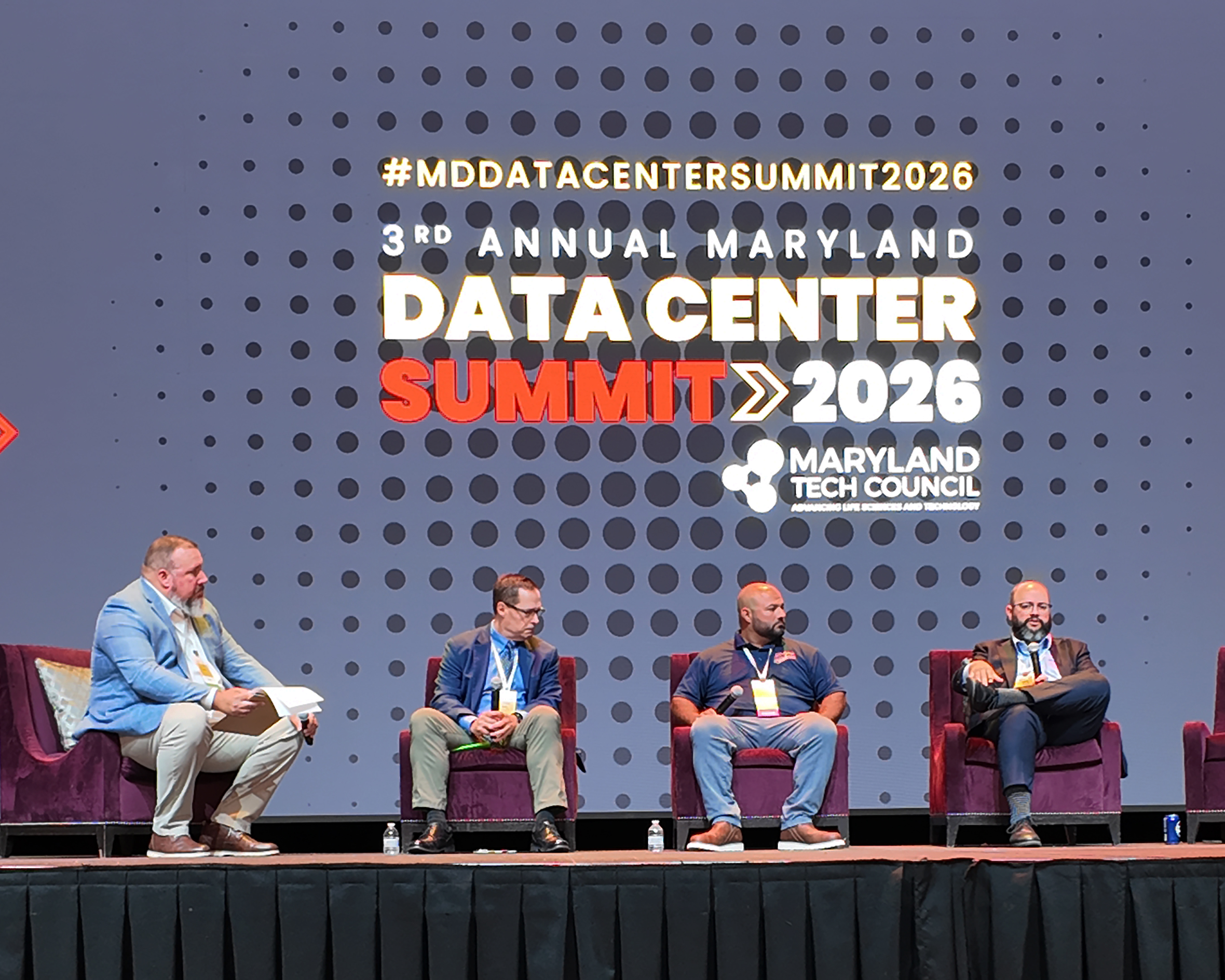
Carmen Voso of the International Brotherhood of Electrical Workers Local 24 spoke about how data centers create career pathways for Marylanders who otherwise may not have them.
“I think the biggest impact of data centers in Maryland is launching a lot of people into the middle class,” he said.
Voso also disputed the notion that data centers only create short-term temporary jobs.
“A 25 year career is not a temporary job,” Voso said. “I have a pension. I have healthcare for myself and my family.”
A recent op-ed in The New York Times cites that work hours for IBEW electricians in the Washington, D.C. area more than doubled over the last decade due to data center construction. The demand has also enabled IBEW to train 600 local apprentices last year alone, putting young Marylanders on the path to stable employment with retirement and health care benefits.
Doug Kelly, CEO of the American Edge Project, noted that Maryland ranks near the bottom in technology job growth, signaling a need to build the digital infrastructure that helps strengthen the local technology ecosystem.
Kelly also emphasized that Maryland’s approach to data centers has impacts beyond its own borders.
“If we shut the door and say we’re going to have moratoriums and we’re not going to allow this to happen, we are going to lose economic competitive advantage in the state and we’re also going to lose our global strategic edge over China with respect to AI,” Kelly said.
Data Centers Create a Local Jobs Ecosystem and a Sense of Purpose
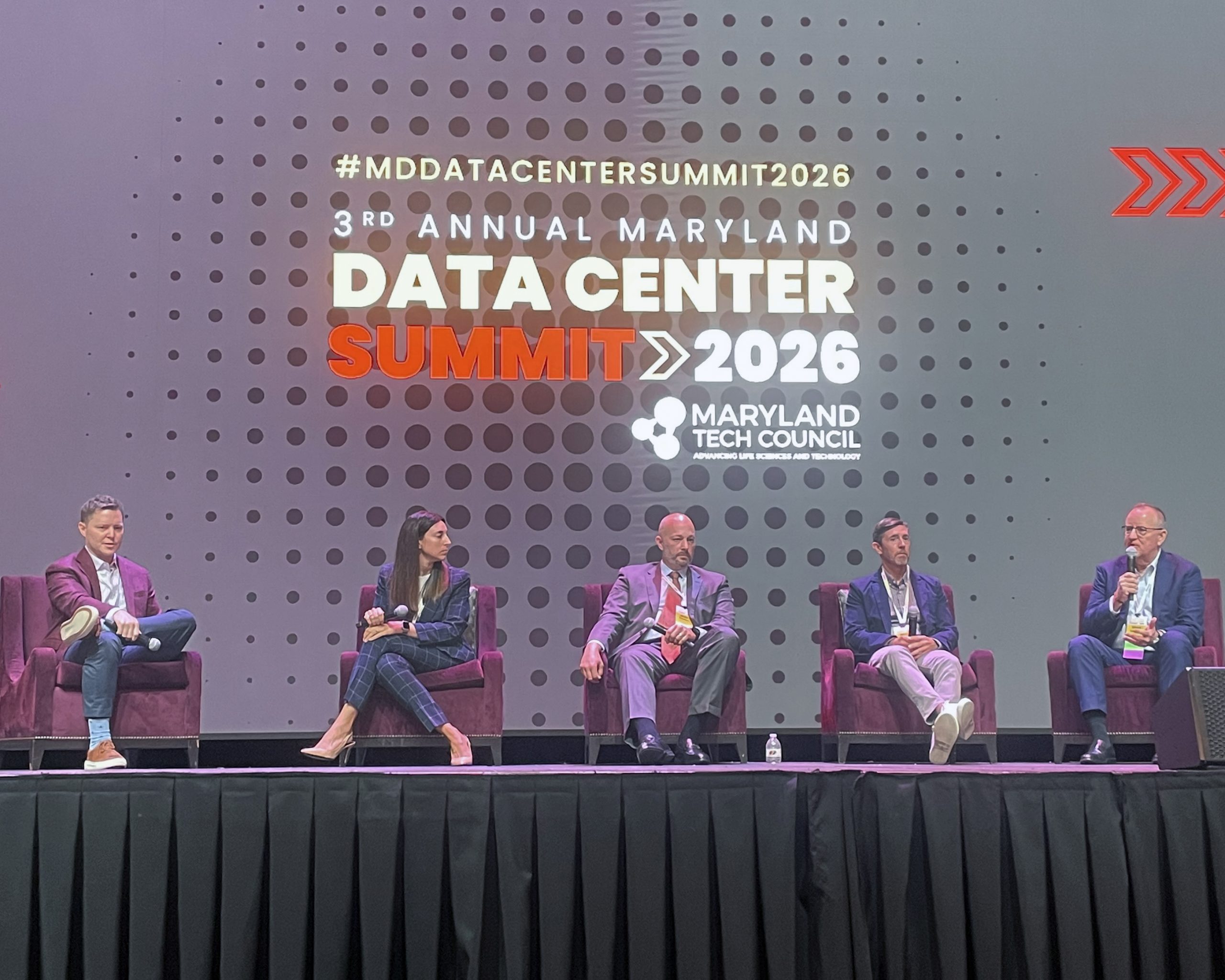 Brian Hatmaker, President of STULZ USA, shared how a single data center construction project creates a ripple effect of benefits for the broader local economy.
“I’ve got 500 people building some of the most incredible equipment on the planet to support one of the most incredible industries out there. But we also have a supply chain behind us – our Tier 2 and Tier 3 suppliers. So when we talk about jobs in data centers we’re talking about a robust ecosystem around the data center. To think of data center employment only in terms of whose working inside the data center is a misnomer.”
Dana Blackwood of Turner Construction spoke to how construction workers find a broader purpose in each facility they build.
“When we build a hospital, we know we are contributing to patients’ lives being saved. In being part of data center construction, there are faster developments in life sciences, in defense technology, in research opportunities. And we can all now take pride in contributing to those advances.”
Conclusion: Prioritize Economic Growth, Preserve Local Character
Taken together, the speakers made the case that Maryland does not have to choose between responsible development and economic opportunity. By adopting clear, predictable rules, protecting ratepayers, and preserving local character, communities can position themselves to capture the jobs, investment, and technological advances data centers make possible. The decisions Maryland makes now will determine whether the state helps shape this next industrial era—or watches the opportunity move elsewhere
Key Speaker Takeaways
- Be curious, not judgemental. Ask questions.
- Data centers mean long-term careers, not temporary jobs.
- Data center developers invest where there are clear rules and predictable policies.
- Maryland should promote its value, and not try to be Virginia 2.0
- Maryland communities can reap the benefits of data center investment while still preserving their unique character.